

Natural to Be Offended, Supernatural to Be Like Christ

Updated: Aug 24
Natural Does Not Always Mean Good
There are many things in life that are natural and good. A deer living in the woods is natural. A child loving his mother is natural. A bird building a nest is natural. A tree reaching toward sunlight is natural. A mother protecting her young is natural.
But simply calling something “natural” does not make it good.
Disease is natural. Death is natural. Predation is natural. Fear is natural. And because humanity lives under the effects of the fall, there are desires, attitudes, and behaviors that arise naturally from fallen human nature that Scripture identifies as sinful.
Anger can come naturally. Lust can come naturally. Sexual immorality can come naturally. Adultery can come naturally. Envy, jealousy, selfishness, bitterness, hatred, and retaliation can come naturally.
Paul describes this reality in Galatians 5:19–21 when he identifies the works of the flesh. He then immediately contrasts those works with something that does not originate from fallen human nature:
“But the fruit of the Spirit is love, joy, peace, patience, kindness, goodness, faith, gentleness, self-control.”— Galatians 5:22–23
This establishes an important biblical principle:
Some things come naturally to us that only the supernatural work of God can overcome.
The Christian life, therefore, is not simply about becoming better at controlling ourselves. It is about the Spirit of God producing within us what our fallen nature does not naturally produce.
And perhaps nowhere is this distinction more evident than in the way we respond when someone hurts us.
David Knew He Needed God
David understood something about himself that every believer eventually must recognize: he could not even see everything within himself that needed to change.
Psalm 19:12 asks:
“Who perceives his unintentional sins? Cleanse me from my hidden faults.”
That is a remarkable prayer.
David understood that there could be sin operating within him that he did not recognize. He was not merely asking forgiveness for the sins he could name. He was asking God to cleanse him from faults hidden even from his own awareness.
Then David continued:
“Moreover, keep Your servant from willful sins; do not let them rule over me.”— Psalm 19:13
The older expression “presumptuous sins” captures the deliberate nature of these sins. David therefore addresses both ends of the problem.
There are hidden sins – things within us that we may not recognize.
There are also presumptuous or willful sins – things we know are wrong and nevertheless choose to do.
But notice where David looked for the answer.
He did not say:
I will become stronger.
I will discipline myself until I conquer this.
I will simply try harder.
David prayed:
“Cleanse me.”
Then:
“Keep Your servant.”
David looked to God.
He recognized that what existed naturally within him required intervention from outside himself. He needed God to reveal what was hidden, cleanse what was sinful, and restrain what threatened to rule over him.
That same principle applies to the way Christians respond to offense.
It Is Natural to Be Offended
When someone insults us, betrays us, mistreats us, lies about us, rejects us, or deliberately harms us, offense can arise almost immediately.
That reaction is natural.
We feel the injustice. We remember what happened. We may become angry. We want the person to acknowledge what they did. Sometimes we want them to experience the pain they caused us.
Human nature says:
“You hurt me, so I have a right to hurt you.”
“You insulted me, so I have a right to insult you.”
“You betrayed me, so I have a right to hate you.”
“You made me angry, so my anger is justified.”
But Jesus repeatedly calls His disciples beyond what comes naturally.
“But I tell you, love your enemies and pray for those who persecute you.”— Matthew 5:44
Jesus does not merely tell us not to attack our enemies. He tells us to love them.
He does not merely tell us to tolerate those who persecute us. He tells us to pray for them.
That is not the natural response.
That is precisely the point.
Jesus Calls Us Beyond the Natural Response
Jesus said:
“But I say to you who listen: Love your enemies, do what is good to those who hate you, bless those who curse you, pray for those who mistreat you.”— Luke 6:27–28
Consider the progression.
Someone hates you.
Do good to them.
Someone curses you.
Bless them.
Someone mistreats you.
Pray for them.
Every response Jesus commands runs contrary to the instinct toward retaliation.
Matthew 5:39 similarly teaches against returning injury for injury:
“But I tell you, don’t resist an evildoer. On the contrary, if anyone slaps you on your right cheek, turn the other to him also.”
Paul carries the same teaching into Romans:
“Do not repay anyone evil for evil.”— Romans 12:17
And then:
“If possible, on your part, live at peace with everyone.”— Romans 12:18
Finally:
“Do not be conquered by evil, but conquer evil with good.”— Romans 12:21
Notice what Scripture does not say.
It does not say evil is not evil.
It does not say mistreatment did not happen.
It does not say the wound was imaginary.
Instead, Scripture determines how the follower of Christ responds to the evil that actually occurred.
But What If I Have Been Hurt? You may ask…
This is where the teaching becomes difficult.
What if the offense was not minor?
What if someone really hurt me?
What if I was betrayed?
What if someone deliberately mistreated me?
What if I did nothing to deserve what happened?
What if the person never apologized?
The biblical passages do not change.
“And be kind and compassionate to one another, forgiving one another, just as God also forgave you in Christ.”— Ephesians 4:32
Romans 12 still says:
“Do not repay anyone evil for evil.”
Peter still says:
“Not paying back evil for evil or insult for insult but, on the contrary, giving a blessing.”— 1 Peter 3:9
Colossians still says:
“Accepting one another and forgiving one another if anyone has a complaint against another. Just as the Lord has forgiven you, so you must also forgive.”— Colossians 3:13
Jesus still tells Peter that forgiveness cannot be reduced to keeping count of offenses in Matthew 18:21–22.
And Romans 12:19 still removes vengeance from our hands and places justice into the hands of God.
Being hurt explains why forgiveness is difficult. It does not remove the command to forgive.
In fact, forgiveness is meaningful precisely because a real wrong occurred.
If there were no offense, there would be nothing to forgive.
If there were no wound, there would be nothing to release.
Biblical forgiveness does not require pretending that nothing happened. Forgiveness acknowledges that something happened and then refuses to become governed by retaliation, bitterness, and vengeance.
Look at Christ
The ultimate example is not theoretical.
It is Jesus.
Peter describes Christ suffering unjustly:
“When He was reviled, He did not revile in return; when He was suffering, He did not threaten but entrusted Himself to the One who judges justly.”— 1 Peter 2:23
Christ was not responding to an imaginary offense.
He was betrayed.
He was falsely accused.
He was mocked.
He was beaten.
He was publicly humiliated.
He was crucified.
And from the cross:
“Father, forgive them, because they do not know what they are doing.”— Luke 23:34
There is the difference between the natural response and the character of Christ.
The natural response says:
“They deserve retaliation.”
Christ says:
“Father, forgive them.”
The natural response says:
“I will make them pay.”
Christ entrusted Himself:
“to the One who judges justly.”
Jesus did not deny the injustice. He entrusted justice to His Father while responding to His enemies with mercy.
The Christian Is Called to the Same Life
Peter makes the connection explicit:
“For you were called to this, because Christ also suffered for you, leaving you an example, so that you should follow in His steps.”— 1 Peter 2:21
Jesus is not merely someone Christians admire.
He is the One whose steps we follow.
Paul says:
“Do nothing out of rivalry or conceit, but in humility consider others as more important than yourselves. Everyone should look out not only for his own interests, but also for the interests of others. Make your own attitude that of Christ Jesus.”— Philippians 2:3–5
Make your attitude that of Christ.
That reaches directly into our response to offense.
When offended, the question is no longer merely:
“What did they do to me?”
The greater question becomes:
“What would the attitude of Christ look like in me right now?”
What Christlike Love Looks Like
First Corinthians 13 gives us a practical picture:
“Love is patient, love is kind. Love does not envy, is not boastful, is not conceited, does not act improperly, is not selfish, is not provoked, and does not keep a record of wrongs.”— 1 Corinthians 13:4–5
This becomes especially revealing when we have been offended.
Am I patient?
Am I kind?
Am I easily provoked?
Am I keeping a mental record of what this person has done?
Am I seeking my own vindication?
Am I responding according to Christ, or merely according to what comes naturally?
Paul similarly says:
“Therefore, God’s chosen ones, holy and loved, put on heartfelt compassion, kindness, humility, gentleness, and patience.”— Colossians 3:12
Ephesians 4:2–3 calls believers to humility, gentleness, patience, bearing with one another in love, and diligently preserving unity.
James 1:19–20 tells us to be:
“quick to hear, slow to speak, and slow to anger.”
Why?
“for man’s anger does not accomplish God’s righteousness.”
James 3:17 describes wisdom from above as:
“pure, then peace-loving, gentle, compliant, full of mercy and good fruits.”
Second Timothy 2:24–25 says:
“The Lord’s slave must not quarrel, but must be gentle to everyone.”
First Thessalonians 5:15 says:
“See to it that no one repays evil for evil to anyone, but always pursue what is good for one another and for all.”
And John brings us back to the foundation:
“Dear friends, if God loved us in this way, we also must love one another.”— 1 John 4:11
These are not isolated verses. They reveal a consistent New Testament pattern.
The follower of Christ is called to respond differently.
This Requires the Holy Spirit
At this point, the temptation is to turn Christianity into another exercise in willpower.
I need to be more patient.
I need to stop getting angry.
I need to forgive.
I need to control my tongue.
Those things may be true, but Scripture points us deeper.
Return to Galatians 5:
“But the fruit of the Spirit is love, joy, peace, patience, kindness, goodness, faith, gentleness, self-control.”
These qualities are called the fruit of the Spirit.
That changes how we understand Christian transformation.
Christlike love is not simply something we manufacture through determination. It is something the Holy Spirit produces as we yield ourselves to God.
That brings us directly back to David.
“Cleanse me.”
“Keep Your servant.”
David looked to God because David knew David could not ultimately fix David.
Likewise, when offense exposes bitterness, anger, retaliation, pride, or unforgiveness within us, we can look where David looked.
To God.
The prayer becomes:
Cleanse me from what I cannot see.
Keep me from what wants to rule me.
Produce in me what I cannot produce naturally.
Make the attitude of Christ visible in me.
Natural Versus Supernatural
The distinction can therefore be stated simply.
Natural: “They hurt me, so I have a right to remain angry.”
Supernatural: “Father, forgive them.”
Natural: “They deserve what they gave me.”
Supernatural: “Do not repay anyone evil for evil.”
Natural: “I cannot love someone who treats me this way.”
Supernatural: “Love your enemies.”
Natural: “I have every reason to hold this against them.”
Supernatural: “Forgiving one another, just as God also forgave you in Christ.”
Natural: “I need to defend myself.”
Supernatural: Christ “entrusted Himself to the One who judges justly.”
Natural: retaliation.
Supernatural: blessing.
Natural: bitterness.
Supernatural: forgiveness.
Natural: anger ruling us.
Supernatural: self-control produced by the Spirit.
The Central Truth
Christianity does not teach that believers will never feel offended.
It teaches us that offense does not have to rule us.
That language takes us directly back to David:
“Do not let them rule over me.”
Something can arise within us without being permitted to become our master.
The offense may be real.
The pain may be real.
The injustice may be real.
But so is the Holy Spirit.
And therefore the believer does not have to remain confined to the response that comes naturally.
Because Jesus died to save AND empower us to be like him
We can love when hatred would be natural.
We can bless when retaliation would be natural.
We can forgive when bitterness would be natural.
We can remain gentle when anger would be natural.
We can entrust justice to God when vengeance would be natural.
Not because the Christian has developed extraordinary human strength, but because God is doing something within the believer that fallen human nature cannot accomplish by itself.
It is natural to be offended; It is supernatural to be like Christ.
Reflection
When I am genuinely hurt or offended, what responses arise most naturally within me, and which of those responses need to be brought before God with David’s prayer: “Cleanse me” and “keep Your servant”? Once we deal with the offense, biblically, we can be released into living in the Fruit of the Spirit, serving Christ.
If the fruit of the Spirit were governing my response to the person who has hurt me most, what would love, patience, kindness, gentleness, forgiveness, and self-control actually look like in that relationship?
Talk to the Lord: Cleanse me, keep your servant; let me live out your holy character, following your steps.
Jesus came to "set the captives free," by the Truth.
Do you know Jesus yet?
Pray and ask Him to deliver you! He will.
email: mike@trainandtell.org
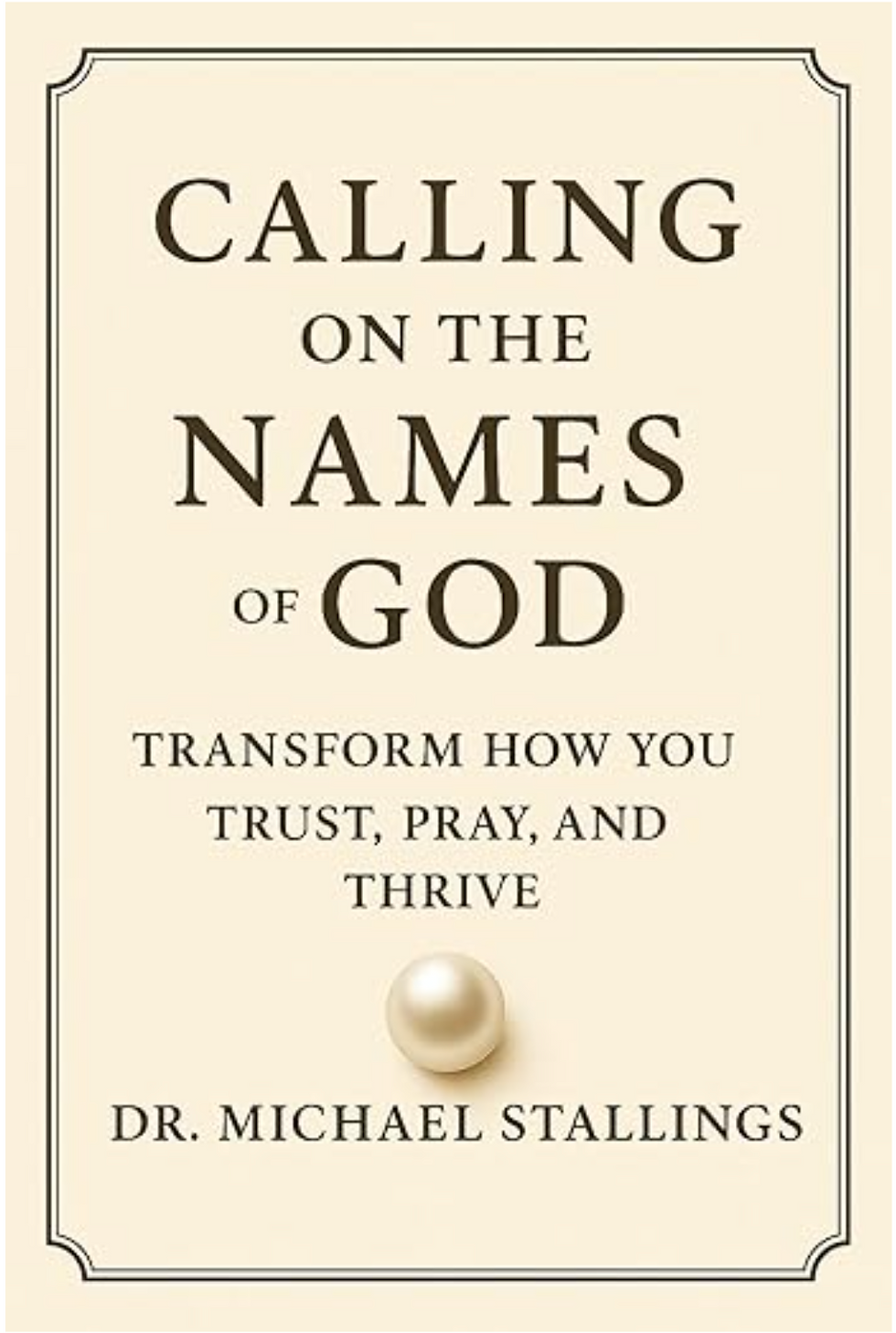
God bless you as you continue to grow in your walk with Him! In Psalm 9:10 we learn, "Those who know your name trust in you because you have not abandoned those who seek you, Yahweh." Learn how the Scriptures describe God and augment your faith with the book people are using to transform their walk with Christ everyday. Click the cover and discover how God transforms those who know His Name and the names that describe His attributes, character and majesty. Just click the cover to begin a 30 day devotional journey that will humble and lift you to a deeper walk with Christ Jesus. Available in Kindle, paperback and Audible and all other retailers offering ebooks.